Other Common Names: Cockspur Thistle, Malta Thistle
Synonyms: Centaurea apula Lam.
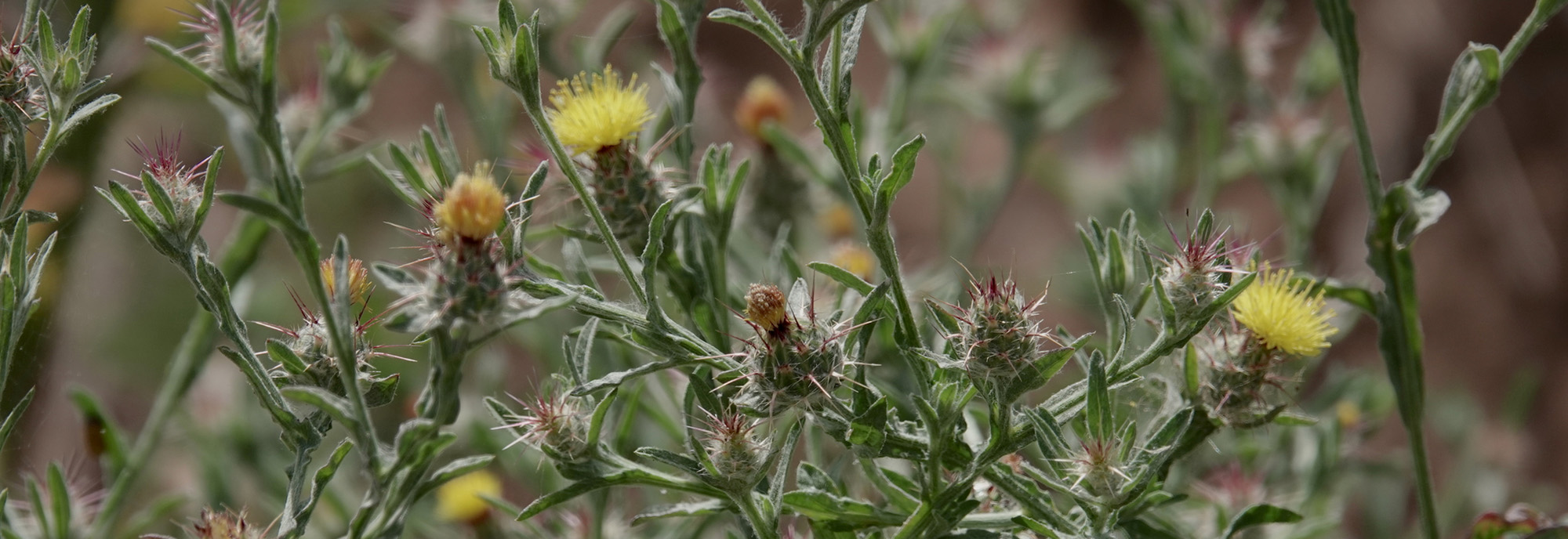

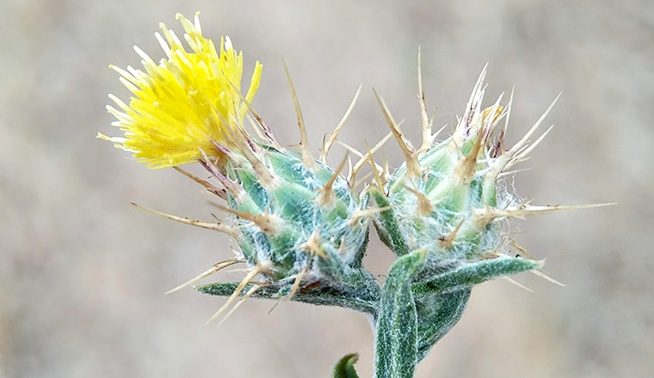
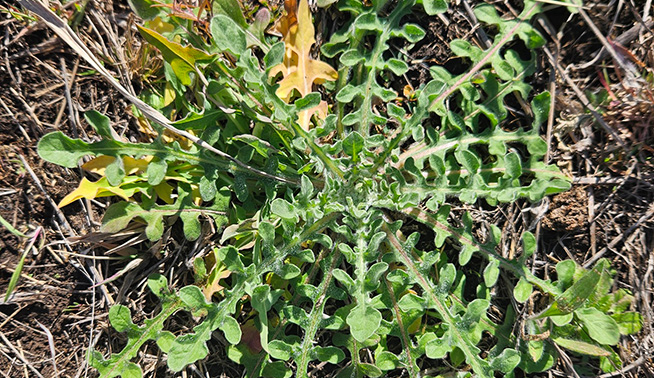
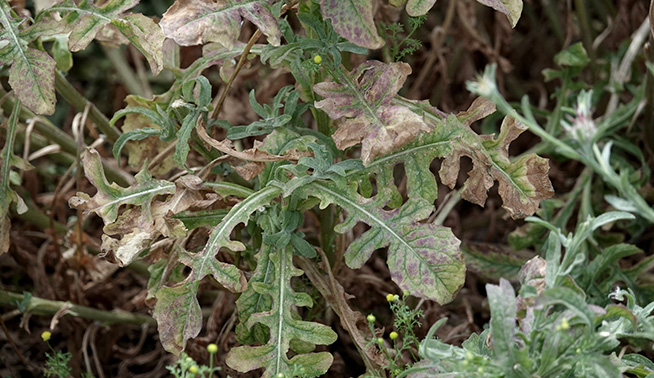
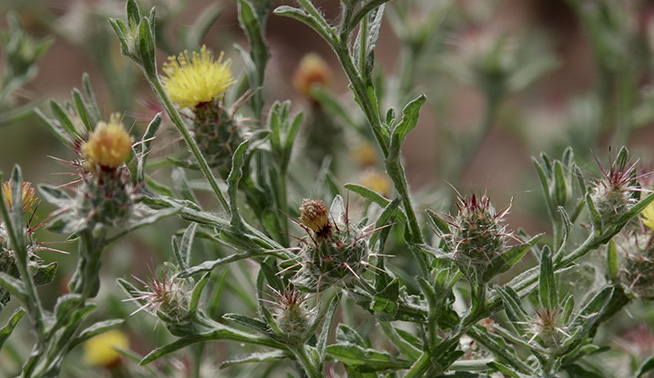
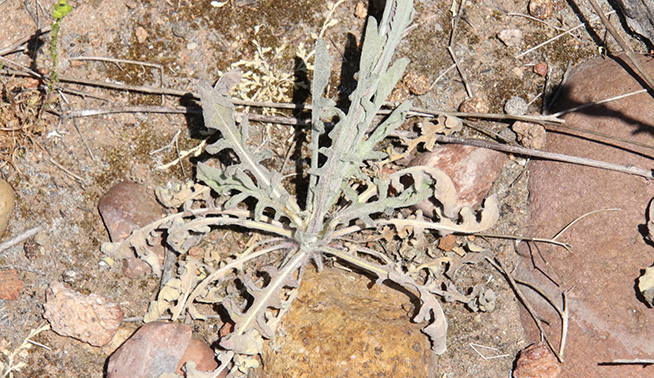
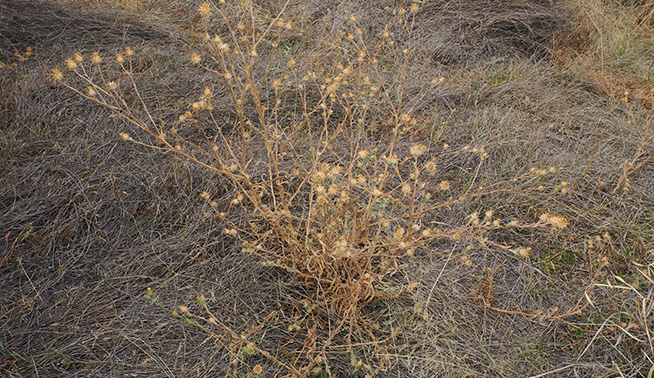
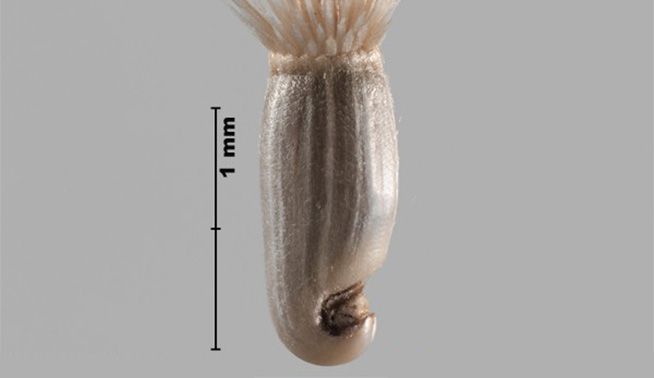
Centaurea melitensis


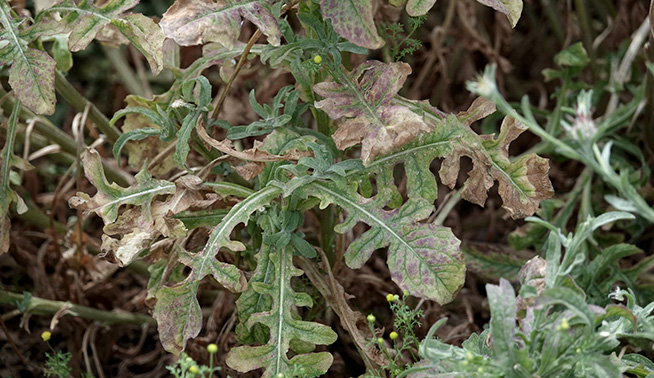
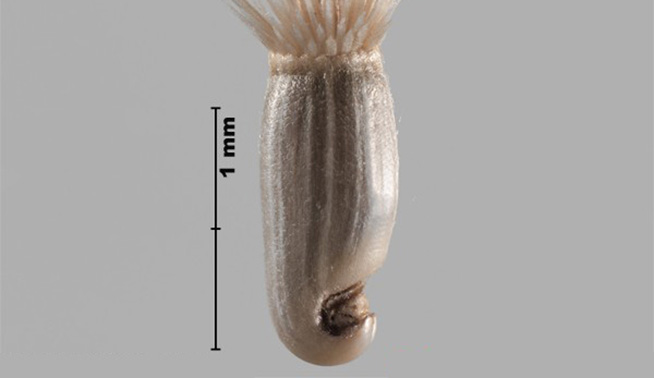
Early detection and removal are essential for preventing establishment. Hand pulling and hoeing can be effective to control small infestation. While hand-pulling, make sure to remove as much of the taproot as possible. It is best to remove the plants when plants are either rosettes or before flowering to prevent the further spread of viable seeds. Hoeing also can be effective, if conducted repeatedly. Please discard the pulled plant in accordant with state/local requirement as unopened flowerhead may be self-fertilising and can produce viable seed.
Chemical treatment is effective in post emergence from bolting to beginning of flowering, since lower rate of herbicide can be used.
Seedling stage
During the seedling stage, apply a mix of 15mL MCPA (570 g/L) in 10L of water using a foliar application method (e.g. backpack or knapsack sprayer) and spot spray seedlings until wet. Do not spray plants near waterways.
Rosette stage
During the rosette stage, apply a mix of 14mL 2, 4-D (625 g/L) in 10L of water using a foliar application method (e.g. backpack or knapsack sprayer) and spot spray seedlings until wet. Do not spray plants near waterways.
Actively growing
While plants are actively growing (plants over 15 cm high), spot spray using a foliar application method (e.g. backpack or knapsack sprayer) with glyphosate (360 g/L) at a rate of 75-100 ml in 15L of water or glyphosate (540 g/L) with a rate of 50-70 ml in 15L of water. If spraying near water, use a bioactive formulation.
LSID number: [51268021] | full LSID: [https://id.biodiversity.org.au/taxon/apni/51268021] | field_lsid: [] | taxon: [Centaurea melitensis]
ALA Reference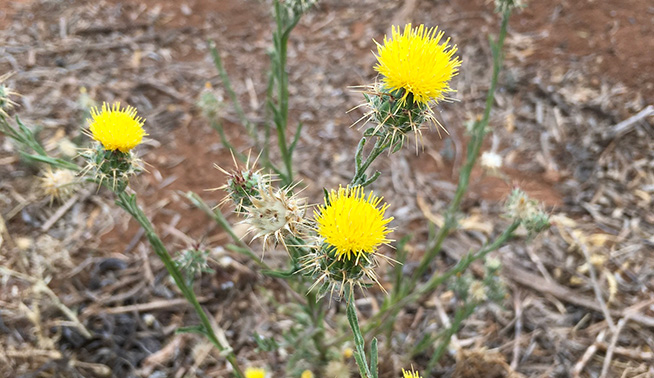
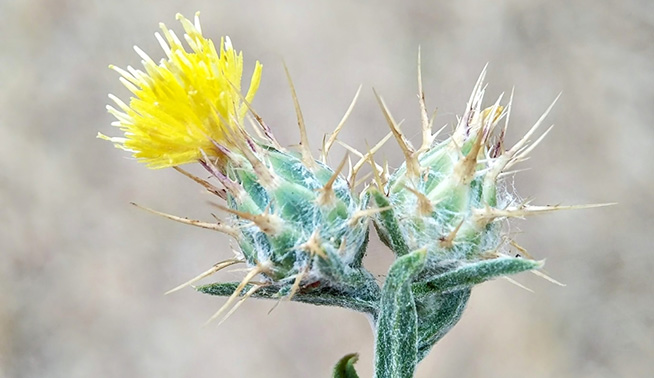
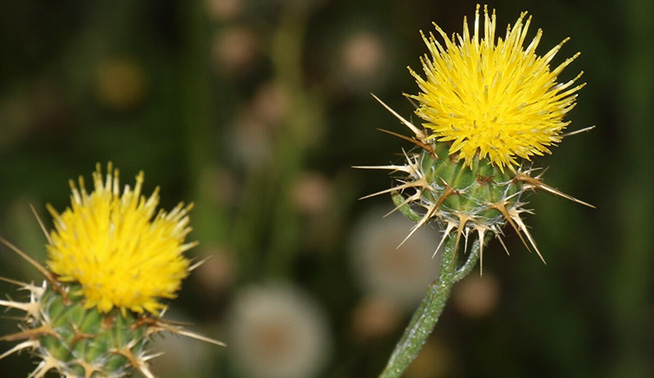
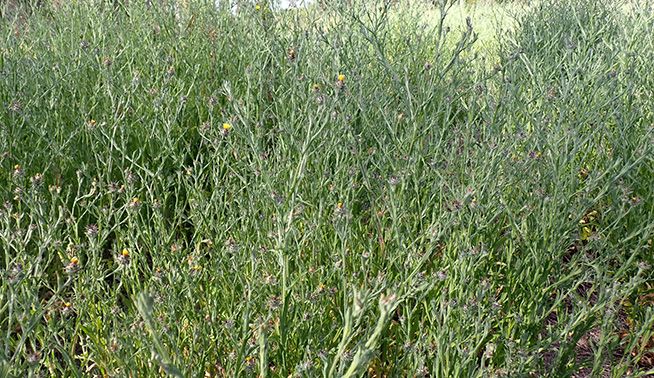
 Atlas of Living Australia. (n.d.)
Centaurea melitensis L
Department of Natural Resources and Environment Tasmania. (n.d.).
Herbicides for Variegated Thistle Control.
FloraSA. (n.d.)
Centaurea melitensis. Flora of South Australia.
Humphries, T., Weller, S.L., Mahony, A., Javaid, M.M., Turville, C. & Florentine, S. (2024)
Seed ecology of the arid zone invasive thistle; Centaurea melitensis L.: A study of the effects of seasonal temperature, pH, salinity and moisture stress. Weed Research, 64(6), 445–455.
Lurdes sarmiento. (n.d.).
Centaurea melitensis: Characteristics, Ecology and Impact as an Invasive Plant.
Atlas of Living Australia. (n.d.)
Centaurea melitensis L
Department of Natural Resources and Environment Tasmania. (n.d.).
Herbicides for Variegated Thistle Control.
FloraSA. (n.d.)
Centaurea melitensis. Flora of South Australia.
Humphries, T., Weller, S.L., Mahony, A., Javaid, M.M., Turville, C. & Florentine, S. (2024)
Seed ecology of the arid zone invasive thistle; Centaurea melitensis L.: A study of the effects of seasonal temperature, pH, salinity and moisture stress. Weed Research, 64(6), 445–455.
Lurdes sarmiento. (n.d.).
Centaurea melitensis: Characteristics, Ecology and Impact as an Invasive Plant.
| JAN | FEB | MAR | APR | MAY | JUN | JUL | AUG | SEP | OCT | NOV | DEC | Notes | |
|---|---|---|---|---|---|---|---|---|---|---|---|---|---|
| Germination | |||||||||||||
| Active growth | |||||||||||||
| Flowering | |||||||||||||
| Fruiting |
| JAN | FEB | MAR | APR | MAY | JUN | JUL | AUG | SEP | OCT | NOV | DEC | Notes | |
|---|---|---|---|---|---|---|---|---|---|---|---|---|---|
| Hand removal | |||||||||||||
| Chemical Treatment |


 Permit PER96570 for MCPA and 2,4-D